MODULE TWO: 2/3-2/9: Reconstruction and the Redemption Era
Section outline
-

Glimpses at the Freedmen - The Freedmen's Union Industrial School, Richmond, Va. / from a sketch by Jas E. Taylor.
Reconstruction was an era in U.S. history that has oftentimes been overlooked or marginalized in our national historical narrative. This era was characterized by a shift in the role of the federal government as Radical Republicans in the North attempted to establish federal protections for newly freed slaves. In the South, local legislatures were populated with black men and the old southern powers were restricted by martial law. However, with the assassination of Abraham Lincoln, there was a power shift as a southern sympathizer, Andrew Johnson, became President.
Reconstruction was also characterized by the question of how to allow seceded states to reenter the Union. As the nation focused its attention on repairing the South, where the majority of the fighting occurred, resistance to equality would lead to the Redemption Era. The promise of equality was would dimmed once the unreconstructed southerners took back control of the South and new laws and restrictions on Black rights were established. By the later part of the 19th Century, the nation turned its attention to the Industrial Revolution and looked west to the Plains and beyond.
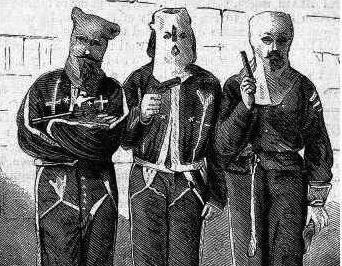
With the end of Reconstruction came a resurgence in the South of violent resistance to the legal and social movement towards equal protection under the law. The newly ratified 13th, 14th, and 15th Amendments were challenged in the courts. At the same time, the White Citizens Council and the Klu Klux Klan organized locally to terrorize black citizens, especially black men who had the right to vote under the 15th Amendment.
While the Radical Republicans established the concept of "equal protection" with the 14th Amendment, this concept did not have a clear definition. What would equal protection mean? After all, our federalism created separate spheres of power. Did the national Congress have the authority to create laws that impacted the way individuals were treated within states? Or was that an overreach of Congressional power? In this era, the Supreme Court took its first steps in defining the power of Congress in creating equal protection laws for citizens.
-
There are 2 Components to this Discussion: Since you have double readings the initial discussion post in not due until Thursday.
Once you have completed the readings and viewings for Module 2, please identify three of the most important characteristics of the Reconstruction Era. How do these characteristics connect to definitions of freedom at that time? How do these definitions of freedom compare to your own?
Next: the Redemption Era covers that latter part of the 19th Century. This is the era the Ku Klux Klan and other homegrown terrorist organizations emerge. These groups emerge in response to the creation of the first federal protection of civil rights. Use the resources assigned this week to explain how Congress' achievements during the Reconstruction Era in establishing equal protection for citizens was met by activists, the Redeemers, and the Supreme Court.
-
 This is a selection not the whole Book. Identify what is important for students to focus on. Are there only parts of a selection that are key? Pairing down content will help students focus on what is important.
 -
For those of you who were unable to access the article online, here is a pdf version.
-

Please read the overview and click on the "textbook" tab. Then click on the first title "Reuniting the Union: A Chronology". At the end of each page, you will find an arrow to go to the next page. Read all pages through the ending "The Significance of Reconstruction"
-
This link takes you to the Khan Academy website for the Black Experience Post-Civil War. Please review the entire content.