MODULE FIVE: 2/24-3/2: Progressivism, Women’s Movement, and Temperance
Section outline
-

If the Second Industrial Revolution's explosion was ignited by capitalists, the subsequent Progressive Era was a direct demand by the people for federal regulation of the free market system. The Progressive Era was characterized by change and the growing mobilization of the working class. Organized protests reflected a growing organized movement of laborers in challenge of the lack of federal and state regulation on the actions of private companies and corporations. The growing diversity that was brought on by European and Asian immigration brought new resistance to the immigrant quest for freedom. Consumerism was on the rise as the U.S. became the largest manufacturer of consumer products.
So what did freedom look like? As always, it depends on the shoes you are in. For many women, the definition of freedom was linked directly with the new wave of feminism that emerges during the Progressive Era. The focus of this feminism was personal, political, and reproductive freedom in the form of access to birth control, sex education, and the suffrage movement. For the Indigenous, freedom was based around the idea of sovereignty and challenges of federal intervention into Indigenous affairs and lands. Meanwhile, the Muckrakers began to shed light on corporate's unsafe practices in both the packaging of meat and the treatment of workers.
-
Please read the Overview of the Progressive Era AND all four sections within the textbook chapter.
-
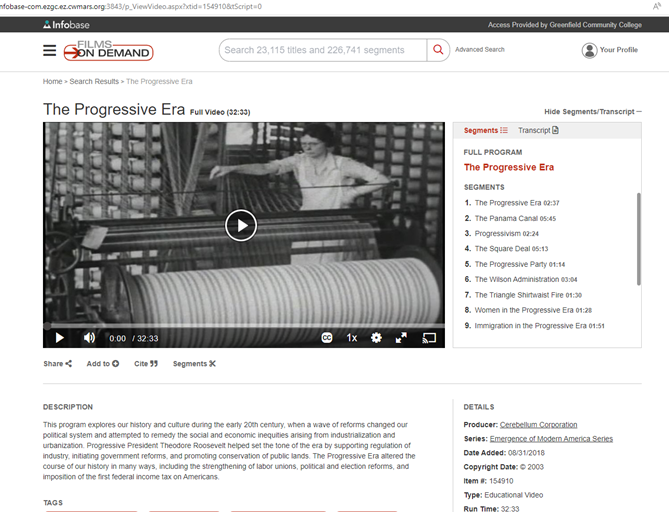
Please watch the video entitled, The Progressive Era, found on Films on Demand on the library website. If the link does not work, please search for the video by the title. https://ezgc.ez.cwmars.org:3843/login?url=https://fod-infobase-com.ezgc.ez.cwmars.org:3843/PortalPlaylists.aspx?wID=15808&xtid=154910